
Mount Kilimanjaro trekking is a dream for many adventurers—and now, you’ve decided to take on the challenge of climbing the rooftop of Africa. Standing tall at 5,895 meters (19,341 feet), Mount Kilimanjaro is not just a bucket-list destination; it’s a deeply personal journey that draws travelers from around the world. Its snow-capped summit, diverse ecosystems, and non-technical trails make it one of the most accessible high-altitude treks on the planet. But make no mistake—success depends on preparation.
The good news? You don’t need ropes or ice axes. However, you do need the right mindset, physical conditioning, a trusted team, and a healthy respect for altitude. Let’s walk through this journey together.
Understand What You’re Signing Up For.
Mount Kilimanjaro is a trek, not a technical climb—but Mount Kilimanjaro trekking is still demanding. The real challenge lies in altitude acclimatization and stamina. You’ll hike for 6–9 days through five distinct climate zones, from lush rainforest to arctic summit, all while carrying the weight of your dream.
Tip: Altitude sickness can affect anyone, regardless of fitness level, so the climb is as much mental as it is physical. Pacing, patience, and hydration are your biggest allies.
Choose the Right Route for You.
Kilimanjaro has several established routes, each offering different scenery, acclimatization profiles, and crowd levels—an important consideration when planning your Mount Kilimanjaro trekking experience:
Machame Route:
Often called the “Whiskey Route,” it offers dramatic scenery and a strong summit success rate due to better acclimatization.Lemosho Route:
Quieter and scenic, starting in a rich forest with excellent acclimatization—ideal for first-time trekkers.Marangu Route:
The “Coca-Cola Route,” featuring hut accommodation. Shorter but with a lower success rate.Rongai Route:
Drier, less crowded, and approaching from the north with a gradual ascent.Northern Circuit:
The longest route (8–9 days) and best for acclimatization and summit success.Umbwe Route:
Steep and direct, recommended only for experienced trekkers.- Shira Route: Starts at higher altitude and may be challenging for those not acclimatized.
Tip: For beginners, Lemosho or Machame offer the best balance of safety, scenery, and success.
Train Smart, Not Hard.
You don’t need to run marathons, but proper training is essential for Mount Kilimanjaro trekking. This is a multi-day hike at altitude, so endurance matters more than speed.
Start 8–10 weeks before your climb:
- Long hikes (6–10 km with elevation gain)
- Stairs, hills, or treadmill incline
- Core, leg, and back strengthening
- Endurance cardio (cycling, jogging, swimming)
- Practice hiking with a loaded daypack (5–7 kg)
Tip: Consistency and endurance beat brute strength every time.
Get the Right Gear.
The weather on Kilimanjaro ranges from humid rainforest to freezing summit nights, so layering is essential during your trek.
Your packing list should include:
- Waterproof, broken-in hiking boots
- Thermal base layers, fleece, and insulated jackets
- Waterproof jacket and pants
- Warm hat, gloves, neck gaiter
- Trekking poles
- Headlamp (summit night essential)
- Sleeping bag rated −10°C to −20°C
- Hydration system + water bottles
Tip: Quality boots and clothing matter more than brand names.
Choose a Responsible, Certified Operator.
All Mount Kilimanjaro trekking must be done with a licensed operator. Don’t choose based on price alone—this is about safety, ethics, and success.
Look for:
- Trained guides (WFR or equivalent)
- Fair porter treatment and clear ratios
- Transparent itineraries
- Strong summit success records
- KPAP Partner Certification
Tip: A good operator protects both climbers and porters.
Acclimatize and Hydrate — Religiously.
Altitude sickness (AMS) is the biggest risk when trekking Mount Kilimanjaro. Prevention is everything.
Golden rules:
- Walk Pole Pole (slowly)
- Drink at least 3 liters of water daily
- Eat regularly
- Monitor symptoms closely
- Consider Diamox (doctor consultation required)
- Choose longer routes with acclimatization days
Tip: Always be honest with your guide—early action saves climbs.
Summit Night – The Final Push.
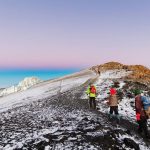
Summit night is the heart of the Mount Kilimanjaro trekking experience. Starting around midnight, you’ll climb slowly under the stars, battling cold, wind, and fatigue.
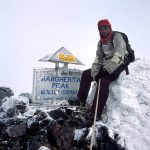
As dawn breaks at Stella Point, emotions run high. One final push—and you reach Uhuru Peak (5,895 m).
Tip: You’re standing on the Roof of Africa. Take it in.
The Descent – Don’t Underestimate It.
Descending more than 2,000 meters in a single day is tough on the body.
- Use trekking poles
- Tighten boots
- Go slowly
- Hydrate and eat
Tip: Most injuries happen on the way down—stay focused.
After the Climb – Recovery & Reflection.
After completing your Mount Kilimanjaro trekking journey, rest and recovery are essential—but the emotional reward lasts a lifetime.
Many climbers celebrate with:
- A wildlife safari
- Zanzibar beach escape
- Cultural village tours
Tip: Tanzania has more to offer beyond the mountain—embrace it.
Final Thoughts.
Mount Kilimanjaro trekking doesn’t just test your body—it reshapes your mindset. With humility, preparation, and the right support, the mountain welcomes you step by step.
Ready to turn your dream into a summit story?
Whether you’re still planning or already training, our expert team at Mateys Wild Tours is here to guide you safely and ethically to the Roof of Africa.
Start planning your Kilimanjaro climb with us today.







![How Did Mount Kilimanjaro Get Its Name? The Fascinating Meaning & History Explained [Expert Guide]](https://www.mateyswildtours.com/wp-content/uploads/2025/06/How-Did-Mount-Kilimanjaro-Get-Its-Name-Meaning-History-Explained-2025-Guide-150x150.jpeg)