

Fort Jesus Museum, Mombasa, Kenya.
Stepping onto Mombasa Island, you immediately feel the pulse of a city shaped by centuries of trade, culture, and conquest. Among its many treasures, one site stands out as a testament to resilience, strategy, and history—Fort Jesus Museum. More than just a museum, it’s a portal into the lives, battles, and stories of the people who shaped the Kenyan coast.
UNESCO World Heritage Site.
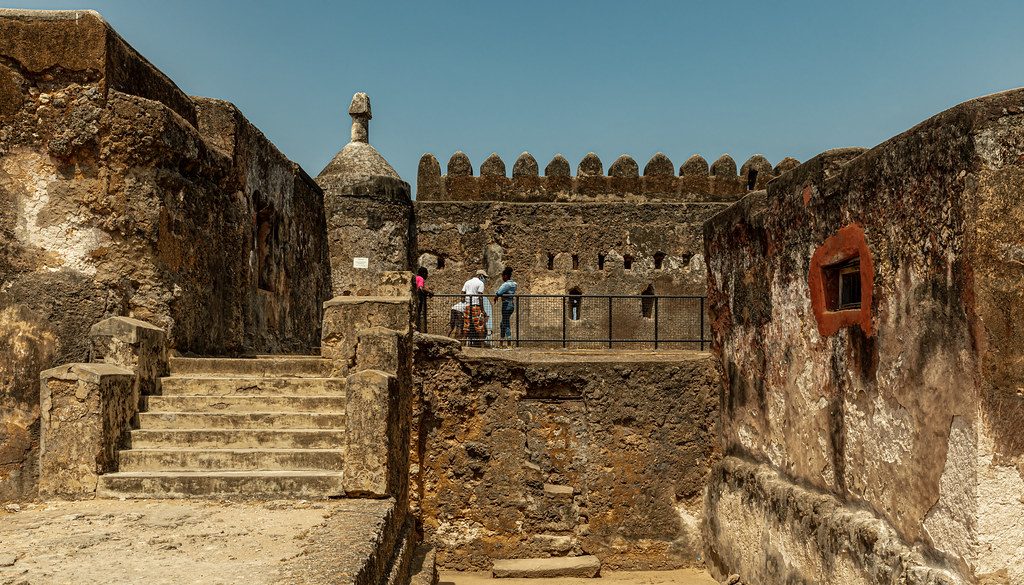
Fort Jesus Museum in Mombasa, Kenya, is one of the city’s most popular cultural attractions. Accredited as a UNESCO World Heritage Site in 2011, Fort Jesus is a Portuguese fort built in 1593 and stands as one of the finest examples of 16th-century Portuguese military architecture in the world. Visiting the fort offers a fascinating introduction to Mombasa’s history and the battles between Muslim Arabs and Christian Europeans for control of the region.
Strategic Location and Design.
The fort is located 490 kilometres (304.5 miles) from Nairobi on Mombasa Island, strategically positioned to guard the Old Port of Mombasa. Built under the orders of King Philip I of Portugal, Fort Jesus was designed by Milanese architect Giovanni Battista Cairati and, from above, resembles a man lying on his back.
A Stronghold of Power.
Fort Jesus was constructed to secure Portuguese safety on the East African coast and represents the first significant attempt by Western civilization to dominate Indian Ocean trade routes, which had long been under Eastern influence. After its completion, the fort became a crucial asset in controlling Mombasa Island and the surrounding trade routes. Between 1631 and 1875, Fort Jesus changed hands nine times before finally falling under British control. Its strategic importance made it one of Africa’s most contested forts.
Layers of Influence.
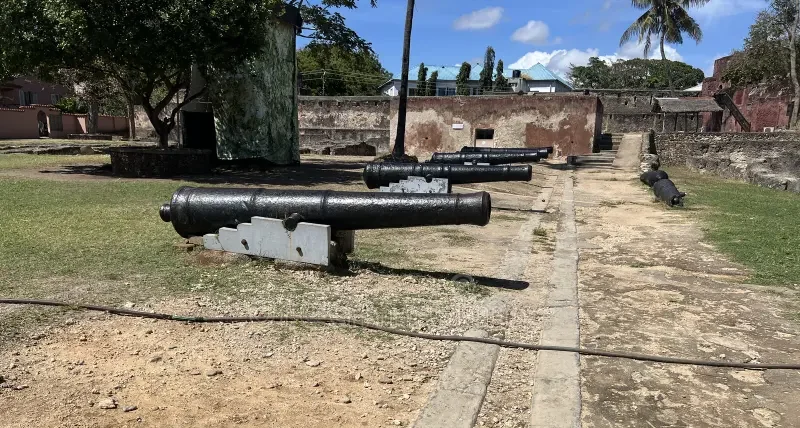
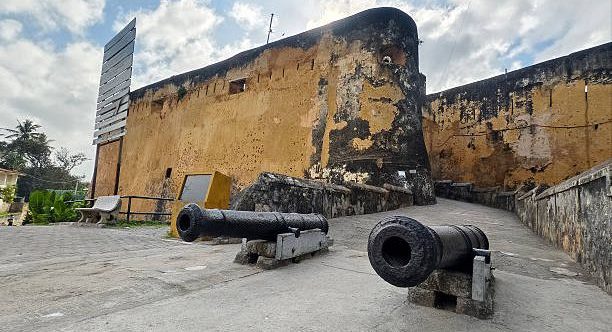
Over the centuries, the fort was altered by successive rulers, leaving traces of Portuguese, British, and Oman Arab influences. The British and Portuguese presence is evident in the cannons on the island, while the Oman Arabs left inscriptions in Koranic script on wooden doors and ceiling beams. Islamic influence is also visible in the five stone pillars supporting the former meeting hall.
From Barracks to Prison to Museum.
Between 1837 and 1895, Fort Jesus served as barracks. Following the proclamation of the British protectorate in 1895, it was used as a prison until 1958, when it was declared a National Monument. Today, the museum allows visitors to explore historical structures such as Oman House, the open water cistern used by the Portuguese, and a 76-foot-deep well sunk by the Arabs.
Artefacts and Exhibits.
While wandering through the museum, visitors can view artifacts, pottery, and ceramics from the era when Mombasa was a key stop for the slave trade and regional commerce. Notable exhibits include the Portuguese frigate Santo António de Tanná, which sank off Fort Jesus in 1698 during a siege.
Swahili Cultural Centre.
Established in 1993, the Swahili Cultural Centre within the museum trains Kenyan youth in traditional Swahili crafts. The program also teaches business management skills, equipping youth to become self-employed and preserve local cultural heritage.
Mombasa Butterfly House.
The recently opened Mombasa Butterfly House features a live butterfly exhibit, presenting a tropical paradise where visitors can learn about butterfly biodiversity and its connection to local communities.
Visiting Hours.
- Hours: Open daily from 08:00 to 18:00
- Best time to visit: Morning or late afternoon for cooler temperatures and softer light for photography
- Must-see: Oman House, water cistern, 76-foot well, and the Swahili Cultural Centre
Why was it named Fort Jesus?
Visiting Fort Jesus Museum is more than a historical excursion—it’s a journey through time. Each wall, artifact, and cannon has a story to tell, inviting you to connect with Mombasa’s past and present in a way few other places can.
The fort was named “Fort Jesus” by the Portuguese in 1593 as a reflection of their Christian faith and as a symbol of protection under the guidance of Jesus Christ. At the time, the Portuguese were expanding their influence along the East African coast, both for trade and religious purposes, and naming the fort after Jesus represented their intention to establish a Christian presence and authority in the region.
The name also served as a spiritual shield—they believed invoking Jesus’ name would protect the fort and its inhabitants from enemies, particularly during the many conflicts with Muslim Arabs and local forces who resisted Portuguese control.
Interestingly, the name has endured for over 400 years, outlasting the Portuguese themselves, and today it stands as a historical landmark recognized globally for its architectural and cultural significance.