

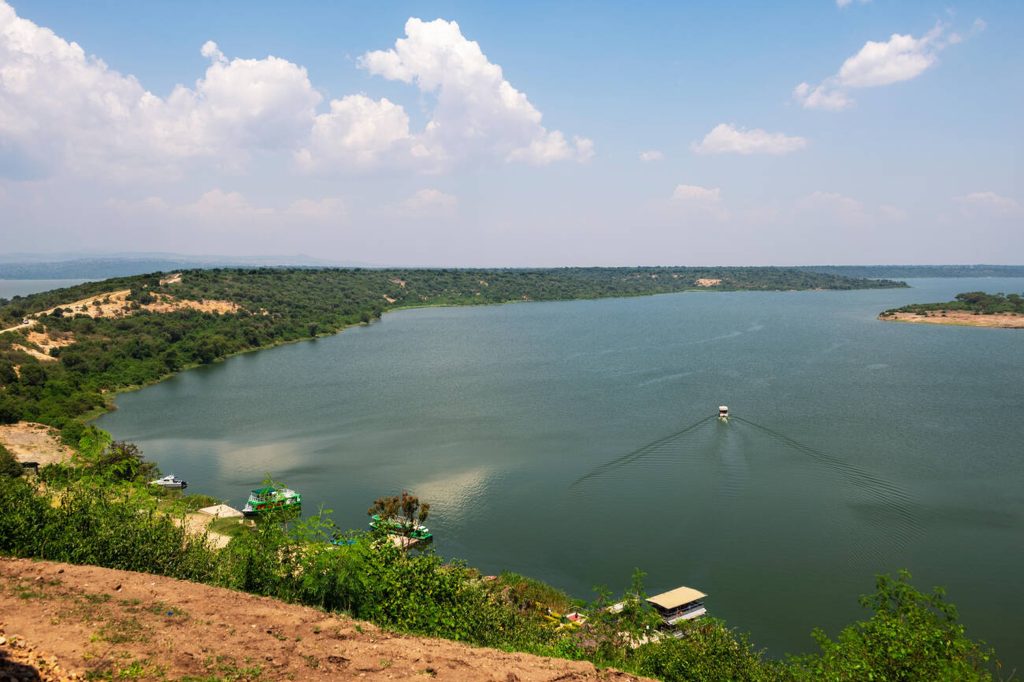
Lake Edward in Queen Elizabeth National Park, Uganda.
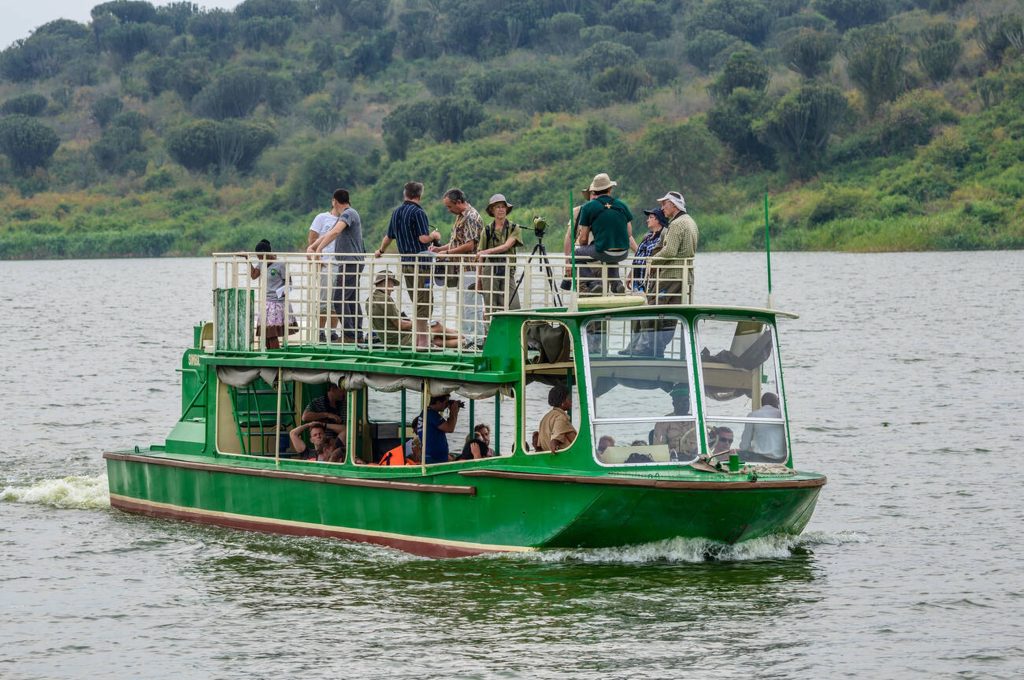
Resting quietly in the western arm of Africa’s Great Rift Valley, Lake Edward is the smallest of the continent’s Great Lakes—but what it lacks in size, it more than makes up for in character, history, and breathtaking beauty. Together with its neighbor, Lake George, it plays a starring role in one of Uganda’s most celebrated natural wonders: the Kazinga Channel, where travelers from around the world set out on boat safaris to witness hippos, elephants, crocodiles, and dazzling birdlife at the water’s edge.
From the moment you stand on its shores, Lake Edward’s charm is undeniable. Lodges scattered around Queen Elizabeth National Park open onto sweeping views of the lake, with sunsets that paint the horizon gold and crimson. On the opposite side, the Virunga National Park in the Democratic Republic of Congo shares this same body of water, linking two countries with a lake that knows no boundaries.
A Lake Forged by Fire and Time.
Scientists believe that Lake Edward and Lake George were once a single massive water body, until volcanic activity reshaped the land and separated the two. Today, the Kazinga Channel acts as a natural bridge between them, reminding us of their shared past.
Together, they form part of the chain of Rift Valley lakes that stretch across East and Central Africa, sustaining both wildlife and the people who live around their shores.
A Lake on the Border.
Because Lake Edward straddles Uganda and the Democratic Republic of Congo, its waters have sometimes been a source of tension. In 2018, the lack of a clear boundary between the two nations sparked a naval skirmish. Yet, despite these disputes, the lake continues to provide food, water, and livelihood to communities along its shores on both sides of the border.
Wildlife and Experiences on Lake Edward.
Lake Edward is more than a scenic backdrop—it’s a thriving ecosystem. Its shores are alive with elephants, buffalo, antelope, and countless bird species, while its waters shelter hippos and Nile crocodiles.
A boat cruise along the Kazinga Channel offers some of the best opportunities to experience this life up close, but simply sitting along Lake Edward’s banks, watching the rhythm of wildlife unfold, is just as rewarding.
For adventurous travelers, visiting both Lake Edward and Lake George offers the chance to retrace the boundaries of their ancient connection and appreciate the geological story that shaped this corner of Africa.
Why Lake Edward Should Be on Your Trip.
Lake Edward embodies everything that makes Queen Elizabeth National Park so extraordinary—wild beauty, deep history, and unforgettable encounters with nature. Whether you’re cruising along the Kazinga Channel, staying in a lodge with lake views, or tracing the footsteps of explorers like Stanley, this timeless Rift Valley treasure leaves a lasting impression.
Ready to experience Lake Edward for yourself? Let us design your journey through Queen Elizabeth National Park, where every sunrise over the lake is a story waiting to be told.
The Story of Lake Edward.
The story of Lake Edward is one of shifting names but enduring grandeur.
In 1888, the legendary explorer Henry Morton Stanley named it in honor of Prince Albert Edward, the son of Queen Victoria. Nearly a century later, in 1973, it briefly became “Lake Idi Amin” after Uganda’s then-dictator renamed it after himself. But nature has a way of outlasting politics—by 1979, following Amin’s fall, the original name was restored.
Despite these changes, the lake itself has remained a constant—wild, majestic, and unspoiled.